

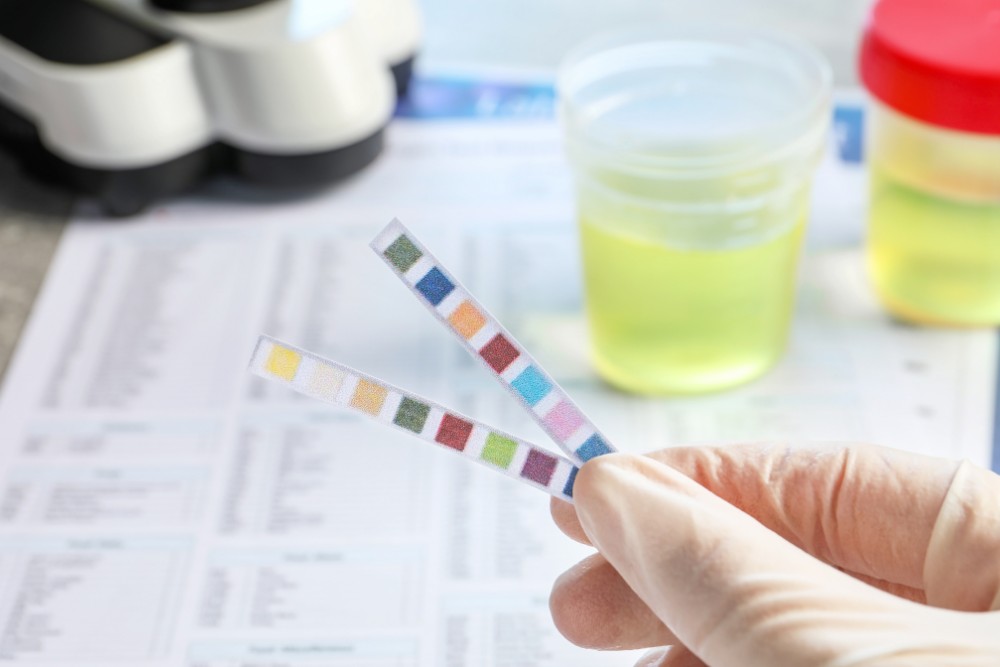
Right, let’s talk about something that’s been largely overshadowed by finger-prick testing but still has its place in the diabetes toolkit: blood sugar urine test strips. I know, I know—they sound positively Victorian compared to the continuous glucose monitors and sleek finger-prick devices we see advertised everywhere. But here’s the thing: they’re still around, still used, and for certain people in certain situations, they actually make sense.
My gran used them for years before switching to blood glucose monitoring, and I’ll be honest, I was curious whether they were just outdated technology or if there was more to the story.
What These Strips Actually Tell You (And What They Don’t)
Here’s where things get interesting. Blood sugar urine test strips don’t actually measure your blood glucose at all—they measure glucose that’s spilled over into your urine. Your kidneys are pretty good gatekeepers, but when blood sugar levels climb above roughly 10 mmol/L (that’s about 180 mg/dL), glucose starts appearing in your wee.
Think of it like this: if your blood sugar is a river and your kidneys are a dam, these strips only tell you when the river’s overflowing. They won’t tell you if your levels are sitting at a normal 5 mmol/L or creeping up to 9 mmol/L. That’s a pretty significant limitation.
According to NHS guidance on blood sugar monitoring, urine testing is generally less accurate than blood testing and doesn’t give you the full picture of what’s happening with your glucose levels throughout the day. The NHS notes that whilst these strips can indicate high blood sugar, they can’t detect hypoglycaemia—which is rather important if you’re on insulin or certain diabetes medications.
So Why Would Anyone Still Use Them?
Fair question. If they’re less accurate and can’t catch low blood sugar, why bother? Well, there are actually some legitimate reasons.
For starters, they’re considerably cheaper than blood glucose test strips. We’re talking pennies per test versus the cost of lancets, blood test strips, and a glucose meter. For someone managing Type 2 diabetes through diet alone—no insulin, minimal medication—and who’s just looking for a basic heads-up if things go pear-shaped, they can be sufficient.
They’re also completely painless. No finger pricking, no blood, no fuss. For people with needle phobia or circulation problems that make finger-prick testing difficult, that’s not trivial. I’ve spoken with a few older patients who found the constant finger pricking genuinely distressing, and urine strips offered them a less invasive way to keep an eye on things.
And here’s something worth mentioning: they can be useful for detecting ketones as well as glucose. Some strips test for both, which can be important for people with Type 1 diabetes who need to monitor for diabetic ketoacidosis. Research published in the journal Diabetes Care back in 2021 highlighted that ketone monitoring remains an essential part of diabetes management during illness or when blood sugars are persistently high, and urine testing remains one accessible method for this.
The Accuracy Problem (It’s Real)
Let’s not dance around it—these strips have genuine limitations that go beyond just missing low blood sugar readings.
They’re retrospective, for one thing. The glucose showing up in your urine now reflects what your blood sugar was doing hours ago, when your kidneys filtered that blood. If you’ve just eaten a massive bowl of pasta, your blood sugar might be spiking right now, but your urine test might still look fine because it’s showing you the pre-pasta situation.
Hydration throws another spanner in the works. If you’re well-hydrated and producing dilute urine, the glucose concentration will appear lower. Dehydrated? The opposite happens. Various medications can also interfere with the results—vitamin C supplements, for instance, can cause false negatives on some strips.
The NHS specifically recommends blood glucose monitoring rather than urine testing for most people with diabetes, particularly anyone on insulin therapy or those who need to make treatment decisions based on their glucose levels.
Where They Fit Into Modern Diabetes Care
So what’s the verdict? Are these strips museum pieces or practical tools?
I’d say they’re somewhere in between. For most people actively managing diabetes—especially Type 1 or insulin-dependent Type 2—blood glucose monitoring is genuinely superior. The accuracy, the immediacy, the ability to catch both highs and lows… it’s just better for making day-to-day decisions about food, exercise, and medication.
But for certain situations? They’ve got a place. Someone newly diagnosed with Type 2 who’s making lifestyle changes and wants a simple, cheap way to check they’re on the right track. Someone who physically can’t do finger-prick testing. People monitoring for ketones during illness.
The key is understanding what you’re getting and what you’re missing. These strips won’t give you the detailed picture that modern glucose monitoring provides, but they can still offer useful information if you know their limitations.
If you’re currently using them, or thinking about it, have a proper conversation with your diabetes nurse or GP. They can help you figure out whether they’re appropriate for your specific situation or whether you’d genuinely benefit from switching to blood glucose monitoring.
Technology moves on, and in diabetes care, it’s moved on rather brilliantly over the past couple of decades. But sometimes the older tools still have their uses—you just need to know when and how to use them properly.
