

Take Control of Your Health with Simple, Accurate Urine Test Strips
Ever wondered what’s really going on inside your body? Whether you’re monitoring a health condition, following a keto diet, or keeping an eye on your pet’s wellbeing, urine testing strips offer a simple, affordable way to get answers from the comfort of your own home.
These clever little strips — also known as urine dipstick test strips or urine sample test strips—have revolutionised how we approach personal health monitoring. What once required a GP appointment and laboratory analysis can now be done in your bathroom in just 60 seconds. And with the rising costs of healthcare, more people across the UK are discovering the benefits of at-home testing.
In this comprehensive guide, we’ll explore everything you need to know about urine test strips: what they are, how they work, who should use them, and how to choose the right ones for your needs—whether you’re testing yourself, your cat, or your dog.
What Are Urine Testing Strips?
Urine testing strips are small plastic strips with colour-changing pads attached to them. Each pad contains chemicals that react with specific substances in your urine, changing colour to indicate the presence and concentration of various health markers.
Think of them as litmus paper on steroids. While a simple pH test strip only measures acidity, modern urine test strips can simultaneously check for up to 14 different parameters in a single test.
Types of Urine Test Strips Available
5-Parameter Strips: Basic testing for the most common markers—typically glucose, protein, pH, blood, and ketones. Perfect for general health monitoring.
10-Parameter Strips: The most popular option, adding tests for specific gravity, leukocytes, nitrites, bilirubin, and urobilinogen. Ideal for comprehensive health tracking.
14-Parameter Strips: Professional-grade testing that includes everything above plus additional markers like ascorbic acid and microalbumin.
How Do Urine Dipstick Test Strips Work?
The science is surprisingly straightforward. Each testing pad on the strip contains chemical reagents that produce specific colour changes when they encounter target substances in your urine.
For example:
- Glucose pads use an enzyme reaction that turns blue-green when sugar is present
- Protein test areas change from yellow to green based on protein concentration
- pH test strips urine sections display a rainbow of colours from orange (acidic) to blue (alkaline)
- Ketone pads turn from beige to maroon when ketones are detected
You simply dip the strip in urine, wait for the specified time (usually 60-120 seconds), and compare the colours to a chart printed on the bottle.
Who Should Use Urine Test Strips?
The beauty of urine testing strips is their versatility. They’re valuable tools for a surprisingly wide range of people.
Humans: When Home Testing Makes Sense
Diabetics and Pre-Diabetics: Regular monitoring of glucose and ketone levels helps you understand how your body responds to diet, medication, and lifestyle changes. Urine diabetes test strips and urine ketone testing strips provide early warnings of complications like diabetic ketoacidosis.
Keto and Low-Carb Dieters: If you’re following a ketogenic diet, urine test strips for ketones confirm you’re actually in ketosis. No more guessing whether those carb cravings have kicked you out of fat-burning mode.
Women Prone to UTIs: Urinary tract infections are frustratingly common. Urine infection test strips detect the telltale signs (leukocytes and nitrites) before symptoms become severe, potentially saving you from an unnecessary GP visit—or alerting you when one is definitely needed.
Pregnant Women: Monitoring protein levels is crucial for detecting pre-eclampsia, a serious pregnancy complication. Urine protein test strips offer peace of mind between midwife appointments.
People Monitoring Kidney Health: If you have chronic kidney disease, diabetes, or high blood pressure, regular testing of protein and specific gravity helps track kidney function over time.
Health Enthusiasts: Those interested in optimising pH balance, hydration status, or general wellness use ph test urine strips as part of their health tracking routine.
Pet Owners: Protecting Your Furry Friends
Just like humans, pets benefit enormously from regular urine monitoring—but they can’t tell you when something feels wrong.
Cat Owners: Feline urinary issues are among the most common health problems in cats. Cat urine test strips help detect UTIs, diabetes, kidney disease, and crystal formation before your cat shows obvious symptoms. Early detection can literally save your cat’s life and your wallet.
Dog Owners: Urine test strips for dogs are essential tools for monitoring chronic conditions, detecting bladder infections, and tracking the progression of kidney disease, especially in senior dogs. They’re also invaluable for diabetic dogs requiring insulin management.
Multi-Pet Households: If you’ve got several cats or dogs, regular urine testing becomes a cost-effective health screening tool that helps you stay on top of everyone’s wellbeing without constant vet visits.
What Do Urine Testing Strips Detect?
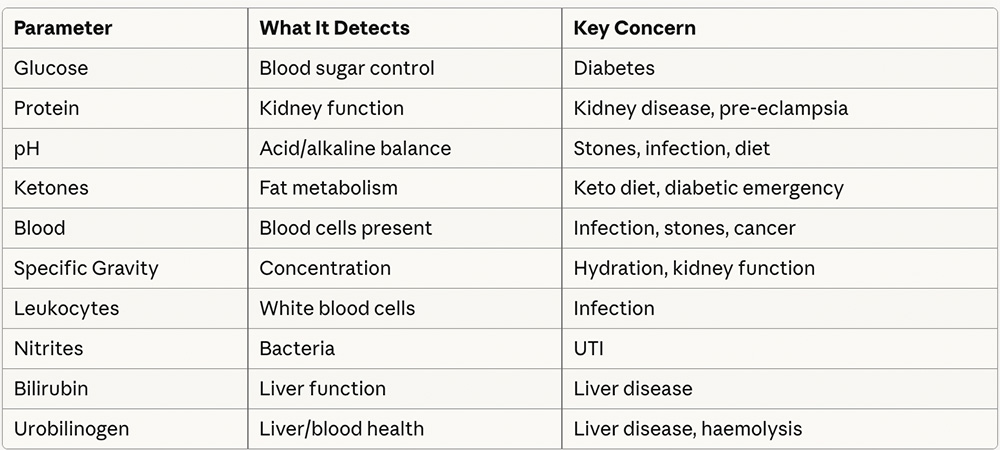
Modern urine test strips can check for up to 14 different health markers simultaneously. Here’s what each parameter tells you:
The 10 Most Common Parameters
1. Glucose (Sugar)
- Normal: Negative
- What it indicates: Diabetes, blood sugar control issues
- Why it matters: Glucose shouldn’t normally appear in urine. Its presence suggests blood sugar levels are high enough to “spill over” into urine—a red flag for diabetes or poor glucose control.
2. Protein (Albumin)
- Normal: Negative or trace
- What it indicates: Kidney disease, pre-eclampsia in pregnancy, dehydration
- Why it matters: Healthy kidneys keep protein in your blood. Persistent protein in urine signals kidney damage or stress.
3. pH (Acidity/Alkalinity)
- Normal: 4.5-8.0 (typically 6.0-7.0)
- What it indicates: Diet, kidney stones risk, UTIs, metabolic conditions
- Why it matters: pH affects crystal formation (stones) and can indicate infection or systemic pH imbalances.
4. Ketones
- Normal: Negative
- What it indicates: Fat burning (ketosis), diabetic ketoacidosis, starvation, low-carb dieting
- Why it matters: Mild ketones are expected on keto diets, but high levels in diabetics indicate a medical emergency.
5. Blood/Haemoglobin
- Normal: Negative
- What it indicates: UTIs, kidney stones, bladder cancer, menstruation, trauma
- Why it matters: Blood in urine always deserves investigation, though causes range from benign (exercise) to serious (cancer).
6. Specific Gravity
- Normal: 1.005-1.030
- What it indicates: Hydration status, kidney function
- Why it matters: This measures urine concentration. Low readings suggest overhydration or kidney problems; high readings indicate dehydration.
7. Leukocytes (White Blood Cells)
- Normal: Negative
- What it indicates: Urinary tract infection, inflammation
- Why it matters: White blood cells in urine signal your immune system is fighting infection.
8. Nitrites
- Normal: Negative
- What it indicates: Bacterial infection (UTI)
- Why it matters: Certain bacteria convert nitrates to nitrites. A positive result strongly suggests a bacterial infection.
9. Bilirubin
- Normal: Negative
- What it indicates: Liver disease, bile duct obstruction, hepatitis
- Why it matters: Bilirubin in urine can indicate liver problems before other symptoms appear.
10. Urobilinogen
- Normal: Small amounts present (0.2-1.0 mg/dL)
- What it indicates: Liver disease, haemolysis (red blood cell breakdown)
- Why it matters: Abnormal levels suggest liver dysfunction or excessive red blood cell destruction.
Visual Overview: What Each Pad Tests
Benefits of At-Home Urine Testing
Why are so many people choosing to test urine samples at home rather than always going through their GP?
Save Money on Healthcare Costs
A single GP appointment can involve taking time off work, travel costs, and potentially long waiting times. Laboratory urinalysis through your doctor might take days for results. Meanwhile, a pot of 100 urine test strips costs around £10-15 on Amazon—working out to just 10-15p per test.
For people with chronic conditions requiring frequent monitoring (diabetics, kidney disease patients, UTI-prone individuals), the savings are substantial.
Early Detection of Health Issues
Many serious health conditions show signs in urine long before symptoms become obvious. Regular testing can catch:
- Kidney disease in its early, treatable stages
- Diabetes before it causes complications
- UTIs before they spread to the kidneys
- Pre-eclampsia in pregnancy
Early detection doesn’t just improve outcomes—it often means simpler, less expensive treatment.
Monitor Chronic Conditions from Home
If you’re managing diabetes, kidney disease, or recurrent UTIs, regular urine testing helps you track how well your treatment is working. You can spot problems between doctor’s appointments and make informed decisions about when to seek medical advice.
Convenience and Privacy
There’s something liberating about being able to test yourself immediately when you’re concerned, rather than waiting days for an appointment. It’s especially valuable for:
- Keto dieters wanting instant feedback on their metabolic state
- Women who get frequent UTIs and know the symptoms well
- Pet owners who want to check their animals without the stress of a vet visit
Track Diet and Lifestyle Impacts
Many health enthusiasts use urine test strips to understand how different foods, supplements, and lifestyle choices affect their bodies. Tracking pH levels, ketones, and specific gravity provides tangible data about hydration, diet effectiveness, and metabolic health.
How to Use Urine Testing Strips Correctly
Using test strips urine is straightforward, but proper technique ensures accurate results.
Step-by-Step Testing Process
1. Gather your supplies
- Fresh urine sample (preferably first morning urine)
- Clean, dry container (if not testing midstream)
- Urine test strips bottle
- Timer or clock with seconds
- Good lighting
- Colour chart (on the bottle)
2. Collect your sample For most accurate results, use first morning urine—it’s more concentrated and shows abnormalities more clearly. Either catch midstream urine in a clean container, or for some strips, you can urinate directly onto the strip.
3. Dip the strip Immerse all testing pads in the urine for 1-2 seconds. Don’t leave it in longer, as this can cause chemicals to wash off or cross-contaminate between pads.
4. Remove excess urine Gently tap the strip against the container’s edge to remove excess urine. This prevents colours from running together and mixing.
5. Wait the correct time This is crucial—different pads require different waiting times, typically between 30 seconds and 2 minutes. The colour chart on the bottle specifies timing for each parameter. Reading too early or too late gives false results.
6. Compare colours in good lighting Hold the strip horizontally next to the colour chart. Match each pad to its corresponding colour block. Natural daylight or bright white light works best.
7. Record your results Write down or photograph your results immediately. Colours continue to change after the reading window, so delayed recording isn’t accurate.
Common Mistakes to Avoid
Mistake #1: Using old or expired strips Chemical reagents degrade over time. Always check expiry dates and store strips properly (cool, dry place, lid tightly closed).
Mistake #2: Contaminating the sample For women, vaginal contamination (blood, discharge, bacteria) causes false positives. For pets, litter or substrate contamination affects results. Collect midstream urine when possible.
Mistake #3: Incorrect timing Reading results too soon or too late throws off accuracy. Different parameters develop at different speeds—protein might be ready at 60 seconds while leukocytes need 90 seconds.
Mistake #4: Poor lighting Trying to read results in dim bathroom lighting leads to misinterpretation. Move to a well-lit area or use a bright torch.
Mistake #5: Testing dilute urine If you’ve just drunk a litre of water, your urine is too dilute for accurate testing. First morning urine or urine that’s been “held” for a few hours is ideal.
How to Read Urine Test Strips: Interpreting Colours
Each testing pad changes to a specific colour based on the concentration of the substance it’s detecting. The colour chart shows a gradient from negative (no change) to increasingly positive results.
For example:
- Glucose: Remains unchanged (green/blue) when negative, turns progressively darker blue-green as glucose concentration increases
- Protein: Stays yellow-green at negative, shifts through green to blue-green as protein levels rise
- pH test strips urine: Display a full rainbow from orange (very acidic, pH 5) through yellow and green (neutral, pH 7) to blue (alkaline, pH 9)
- Ketones: Stay beige/tan when negative, turn pink then purple as ketone concentration increases
Understanding trace results: Many parameters show “trace” as the lowest positive reading. This might be clinically insignificant (especially for protein after exercise) or an early warning sign. Context matters—track whether trace results persist or worsen.
Dealing with borderline readings: Sometimes a colour falls between two blocks on the chart. Generally, interpret conservatively (go with the lower reading) but retest the next day to see if there’s a pattern.
Humans vs Pets: Key Differences in Testing
Can you use the same urine test strips for yourself and your pets? Mostly yes, but there are important differences to understand.
Can You Use the Same Strips?
The chemical reactions are identical—a glucose pad detects glucose whether it’s in human, cat, or dog urine. However, normal reference ranges differ significantly between species.
What’s normal for a human might be abnormal for a cat, and vice versa. This is why it’s essential to interpret results using species-appropriate guidelines or consult with a vet for pet testing.
Collection Method Differences
Humans: Straightforward—urinate into a cup or directly onto the strip.
Cats: Requires non-absorbent litter (special collection litter, aquarium gravel, shredded plastic, or cling film in the litter box). You then transfer urine to a container or use a syringe to draw it up. Cat urine test strips work exactly the same way once you have the sample.
Dogs: Usually involves “catching” urine in a clean container during outdoor toileting. Urine test strips for dogs follow the same testing procedure—dip, wait, read.
Interpretation Variations by Species
pH Differences:
- Humans: Normal pH 6.0-7.5
- Dogs: Normal pH 6.5-7.0
- Cats: Normal pH 6.0-7.0
Cats eating dry food often have more alkaline urine (higher pH), which increases risk of struvite crystals. Dogs with UTIs typically show alkaline urine.
Specific Gravity:
- Humans: 1.005-1.030
- Dogs: 1.015-1.045 (more concentrated)
- Cats: 1.035-1.060 (even more concentrated)
Cats naturally produce very concentrated urine. A specific gravity below 1.035 in a cat might signal kidney disease, while that same reading would be perfectly normal in a human.
Glucose: All species should show negative glucose in urine. However, cats have a unique quirk—stress can temporarily spike their blood sugar high enough to spill into urine, even without diabetes. This “stress hyperglycemia” is less common in dogs and humans.
When to Use Pet-Specific Strips vs General Strips
Most standard 10-parameter urine test strips work fine for pets when interpreted correctly. However, some manufacturers sell pet-specific versions that include:
- Pet-appropriate colour charts with species reference ranges
- Testing pads optimised for pet urine pH and concentration
- Instructions specifically for pet sample collection
These can be helpful if you’re new to pet testing, but experienced pet owners often use standard human strips successfully with cat urine test strips or urine test strips for dogs.
When to See a Professional
Home testing is incredibly valuable, but it has limitations. Knowing when to put down the test strips and pick up the phone is crucial.
Red Flags Requiring Immediate Medical Attention
For Humans – See a Doctor Immediately If:
- Heavy blood in urine (bright red or brown)
- High levels of glucose AND ketones (diabetic ketoacidosis warning)
- Severe protein levels (3+ or 4+)
- Positive blood test accompanied by fever, back pain, or feeling unwell
- Any positive result during pregnancy (especially protein or blood)
- Multiple abnormal parameters simultaneously
For Pets – See a Vet Immediately If:
- Male cat straining to urinate (potential life-threatening blockage)
- Blood in urine with signs of pain or distress
- High glucose in a non-diabetic pet
- Inability to urinate or only producing drops
- Positive results accompanied by lethargy, vomiting, or behaviour changes
Limitations of Home Testing
Urine dipstick test strips are excellent screening tools but aren’t diagnostic:
They can’t identify specific bacteria: A positive nitrite or leukocyte result tells you there’s likely an infection, but not which bacteria or which antibiotic will work. You’ll need a proper culture for that.
They miss some kidney diseases: Early kidney disease might not show abnormalities on test strips. Blood tests (creatinine, BUN) are more sensitive.
They can’t replace microscopic examination: Some crystals, cells, and casts only show up when urine is examined under a microscope.
False results happen: Medications, foods, vitamins, and timing can all affect results. Vitamin C, for instance, can cause false negatives on glucose and blood tests.
They don’t explain WHY: A positive protein result could mean anything from temporary dehydration to serious kidney disease. Professional assessment is needed to determine the cause.
When Repeated Abnormal Results Warrant Investigation
One abnormal reading doesn’t always mean disaster. Bodies have bad days. However, if you see:
- The same abnormality on two or three consecutive tests
- Progressively worsening results (trace protein becoming 1+, then 2+)
- Multiple parameters becoming abnormal
- Any persistent positive result without an obvious temporary explanation
…it’s time to see a doctor or vet for proper diagnostic workup.
Choosing the Right Urine Test Strips
With dozens of options on Amazon alone, how do you pick the right test strips urine for your needs?
For General Health Monitoring
If you’re simply interested in keeping tabs on your overall wellness, a good quality 10-parameter strip offers comprehensive coverage without overwhelming detail. Look for established brands with consistent reviews.
What to buy: Mid-range 10-parameter strips from brands like Mission, Siemens, or HealthyWiser. Budget around £10-15 for 100 strips.
For Specific Conditions
Diabetes monitoring: You need strips that accurately test glucose and ketones. Consider getting separate, dedicated ketone strips for more precise ketone measurement if you’re managing Type 1 diabetes.
UTI detection: Focus on strips that clearly test leukocytes and nitrites. Some “UTI-specific” strips only test these parameters plus pH, which is fine if that’s all you need.
Keto diet tracking: Urine ketone testing strips are your friend here. Simple 2-parameter strips (pH + ketones) are often cheaper than 10-parameter versions and perfectly adequate for dietary ketosis monitoring.
Kidney disease: Protein and specific gravity are your key markers. 10-parameter strips cover these plus additional useful information.
Pregnancy monitoring: Protein detection is crucial. Most standard urine protein test strips work well, but ensure they’re sensitive to lower protein levels.
For Pets
Both cat urine test strips and urine test strips for dogs benefit from 10-parameter coverage because you’re often looking for multiple issues (infection, kidney function, diabetes, crystals).
Multi-pet households: Buy in bulk. Look for bottles of 100-150 strips to bring down per-test costs.
Single pet monitoring: Even a 50-strip pot lasts ages when you’re only testing monthly or when concerned about symptoms.
Understanding Storage and Expiry
To get accurate results, you need to treat your urine testing strips with care.
Proper Storage Matters
Always keep the lid tight: Exposure to air and moisture degrades the chemical reagents. Each time you open the bottle, humidity gets in. Take out one strip, close the lid immediately.
Store in a cool, dry place: Bathroom cabinets seem logical but are often too humid. A bedroom drawer or kitchen cupboard away from the kettle is better.
Don’t refrigerate: Despite being a “cool” place, refrigerators introduce moisture. Room temperature (below 30°C) is ideal.
Avoid direct sunlight: UV light damages the reagents.
Keep the desiccant pack: That little packet in the bottle absorbs moisture. Don’t remove it.
Check Expiry Dates
Expired strips give unreliable results. Chemical reagents break down over time, leading to false negatives (missing real problems) or false positives (creating unnecessary worry).
Most strips last 2 years from manufacture when stored properly. Buy from retailers with good turnover to ensure freshness.
Once opened, use within 3-6 months for best results, even if the expiry date is further out.
Signs Your Strips Have Gone Bad
- Discoloured pads (yellow, brown, or darkened)
- Visible moisture in the bottle
- Pads that change colour before use
- Inconsistent results when testing the same sample twice
When in doubt, buy fresh strips. At 10-15p per test, it’s not worth risking inaccurate health information to save a few pounds.
Top Tips for Accurate, Reliable Results
Getting the most from your urine sample test strips requires attention to detail.
Test at the Right Time
First morning urine is gold standard for most tests. It’s concentrated (showing abnormalities more clearly) and consistent day-to-day. For tracking chronic conditions or comparing results over time, always test at the same time of day.
Exception: If you’re monitoring ketones on a keto diet, testing in the afternoon or evening might show higher readings (ketones accumulate throughout the day).
Avoid Contamination
For women: Wipe front to back before collecting urine. Avoid testing during menstruation if possible (blood contamination). Consider using a tampon if you need to test during your period.
For everyone: Use a clean, dry container. Soap residue or water in the collection cup affects results.
For pets: Use non-absorbent collection methods. Litter, grass, and dirt contaminate samples.
Don’t Drink Excessive Water Before Testing
While hydration is healthy, drinking a litre of water right before testing dilutes your urine so much that abnormalities might not show up. Test when you haven’t had excessive fluids for a couple of hours.
Record Results Systematically
Whether you use a notebook, spreadsheet, or phone app, consistent record-keeping helps you spot trends. Note:
- Date and time
- Results for each parameter
- Any symptoms or context (e.g., “feeling unwell,” “after exercise,” “started new medication”)
Over time, patterns emerge that help you and your healthcare provider make better decisions.
Compare to Previous Results, Not Just Reference Ranges
Your “normal” might be different from population averages. If your pH is consistently 6.0, a sudden reading of 7.5 is worth investigating even though both are within the “normal” range.
Urine Test Strips FAQs
Q: Are urine test strips as accurate as laboratory tests?
For screening purposes, yes—they’re remarkably accurate. However, laboratory urinalysis includes microscopic examination and sometimes culture, which provides additional information strips can’t match. Think of strips as an excellent first-line tool, with lab tests as the gold standard for diagnosis.
Q: Can I reuse a urine test strip?
Absolutely not. The chemical reagents react on contact with urine and can’t be “reset.” Each strip is single-use only.
Q: How often should I test?
It depends on your situation:
- Healthy pets: Every 3-6 months for screening
- Healthy adults monitoring wellness: Monthly or when concerned
- Diabetics: As recommended by your doctor (often weekly or when unwell)
- Keto dieters: Daily when starting, then 2-3 times weekly once established
- UTI-prone individuals: At first sign of symptoms
- Pets with chronic conditions: Weekly to monthly as advised by your vet
Q: Can medications affect test results?
Yes. Vitamin C supplements can cause false negatives on glucose and blood tests. Phenazopyridine (a UTI pain reliever) turns urine orange and affects multiple readings. Some antibiotics interfere with nitrite tests. Always consider medications when interpreting results.
Q: What if I get different results from the same sample tested twice?
This sometimes happens and can indicate:
- Reading at different times (colours continue developing)
- Different lighting conditions
- One strip from an old batch
- User error in colour matching
When results conflict, test again the next day with fresh urine.
Q: Do I need different strips for cats and dogs?
No—the same strips work for both. However, reference ranges differ between species, so interpret results accordingly or consult your vet.
Q: Can urine infection test strips diagnose a UTI?
They can strongly suggest one. Positive leukocytes and nitrites together indicate bacterial infection with about 80% accuracy. However, a proper UTI diagnosis requires a urine culture to identify the bacteria and appropriate antibiotics.
Q: Are expensive strips better than cheap ones?
Not necessarily. Brand reputation matters more than price. Well-reviewed mid-range strips from established companies often perform as well as premium versions. Very cheap, no-name strips from unknown manufacturers are more risky.
Q: How do I know which parameters I need to test?
For general health screening, 10-parameter strips cover all bases. For specific monitoring, you can use simpler strips—2-parameter pH and ketone strips for keto diets, or UTI-specific strips testing only leukocytes, nitrites, and blood.
Q: Can I test my urine immediately after exercise?
Exercise can temporarily cause protein and blood to appear in urine. For most accurate results, test when you’ve been resting for a few hours. If monitoring a specific condition, test at the same time of day under similar conditions each time.
Take Control of Your Health Today
Home health monitoring has never been more accessible or affordable. Urine testing strips put laboratory-quality screening right in your hands—whether you’re tracking your own health, managing a chronic condition, monitoring your diet, or keeping your pets healthy.
The £10-15 investment in a pot of test strips could:
- Catch a urinary infection before it becomes serious
- Confirm you’re successfully in ketosis on your diet
- Detect early kidney problems in your diabetic cat
- Alert you to pre-eclampsia during pregnancy
- Give you peace of mind between doctor’s appointments
Remember, these strips are powerful screening tools, but they work best when you understand what you’re testing, how to test correctly, and when to seek professional help. Use them wisely as part of a broader approach to health that includes regular check-ups, good lifestyle habits, and medical advice when needed.
Ready to start monitoring your health at home?
Browse our recommended urine testing strips on Amazon and find the perfect option for your needs—whether you’re looking for comprehensive 10-parameter testing, specialised glucose and ketone strips, or pet-friendly options for your cats and dogs.
View Top-Rated Urine Test Strips on Amazon →
Take that first step toward better health awareness today. Your body (and your pet) will thank you.
