

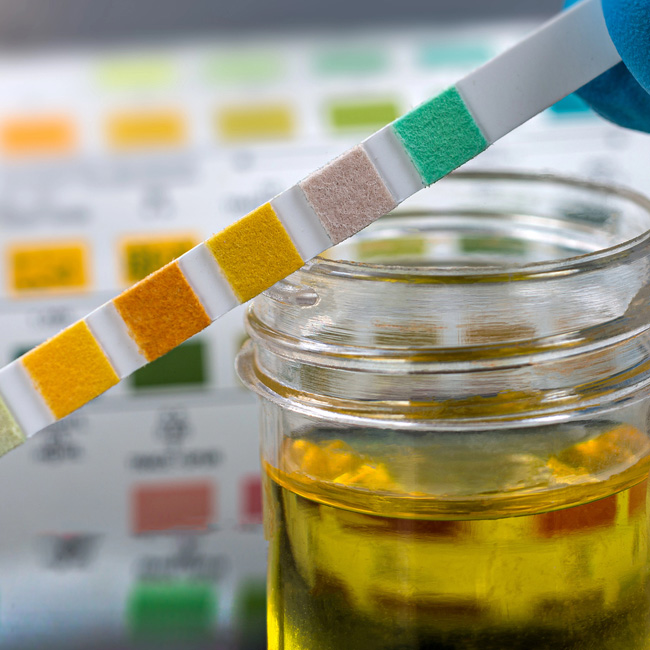
I’ve been there – that unmistakable discomfort that has you running to the loo every twenty minutes, wondering if you’ve got a UTI or if you’re just imagining things. The last thing you want is to trek to the GP for what might turn out to be nothing, but you also don’t want to ignore something that could get worse.
Home UTI test strip kits have become surprisingly sophisticated over the past few years. Gone are the days when your only option was to collect a sample in a tiny plastic cup at the surgery. Now you can get a pretty reliable answer in your own bathroom, often within a couple of minutes.
What Are You Actually Testing For?
Here’s the thing about UTI tests – they’re not actually detecting the bacteria directly. Instead, they’re looking for signs that bacteria are throwing a party in your urinary tract. Most home tests check for two main things: leukocytes (white blood cells that show up when you’re fighting an infection) and nitrites (a byproduct some bacteria produce).
The NHS explains that UTIs are incredibly common, especially in women, with around half of all women experiencing at least one in their lifetime. But not every twinge down there means you’ve got an infection, which is where these tests come in handy.
I think it’s worth noting that home tests aren’t perfect. According to research published in the British Journal of General Practice in 2022, home UTI tests have a sensitivity of around 75-90% for detecting infections. That’s pretty good, but it also means they can miss some infections or occasionally flag up a false positive.
The 3 Top Contenders Worth Considering
If you’re looking for a reliable urine test strip to help identify or monitor a UTI at home, these three options cover the same essential ground — Nitrite, Leukocytes, Blood, and Protein — while each bringing something slightly different to the table.
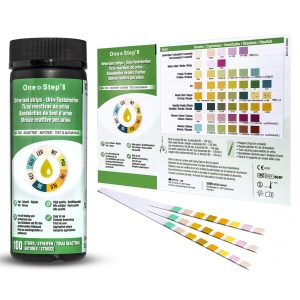
The One Step 8 Parameter Urine Test Strips are a solid, no-frills option for anyone whose primary concern is urinary and kidney health. They cover the core UTI markers clearly and efficiently, with UKAS-accredited quality testing behind them and results in 60 to 120 seconds.
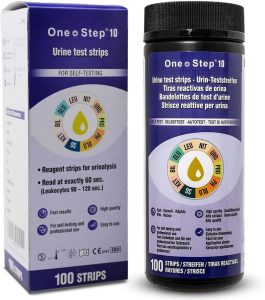
Step up to the One Step 10 Parameter Urine Test Strips and you get two additional parameters — Bilirubin and Urobilinogen — which extend the picture beyond urinary health into liver function. For someone who wants broader diagnostic coverage without complicating the testing process, this is a natural upgrade, and it carries the same rigorous quality assurance credentials.
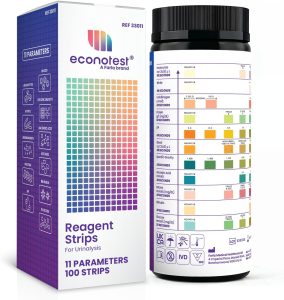
The Econotest Reagent 11-in-1 Urine Test Strips go one further with the addition of an Ascorbic Acid pad — a meaningful inclusion for UTI testing specifically. High Vitamin C levels in urine can suppress Nitrite readings, potentially masking a bacterial infection. By flagging this interference directly, Econotest adds a layer of result reliability that the others don’t offer. Results also come slightly faster, with most parameters readable from 30 seconds.
How to Actually Use These Things
The process is pretty simple, though there are a few tricks to getting accurate results. First up, timing matters. Your first wee of the morning is best because it’s been sitting in your bladder longest, giving bacteria more time to produce those nitrites the test looks for.
You’ll need a clean container – an old jam jar works fine if you’ve washed it thoroughly. Collect midstream urine (that means starting to pee, then catching some in the container, then finishing in the toilet). This helps avoid contamination from bacteria that naturally live around your urethra.
Dip the strip according to the instructions – usually for about two seconds – then wait the specified time. Don’t read the results too early or too late, as the colours continue changing. Most tests want you to check at exactly two minutes.
One thing that caught me off guard when I first researched this: drinking loads of water can actually dilute your urine enough to affect test results. If you’ve been chugging water all morning trying to ‘flush out’ a UTI, you might get a false negative. The NHS advice on managing UTIs does recommend drinking plenty of fluids, but maybe hold off on the mega-hydration until after you’ve tested.
When a Home Test Isn’t Enough
Right, here’s where I need to be serious for a moment. Home tests are brilliant for peace of mind and catching things early, but they’re not a replacement for medical care when you need it.
If you’re running a fever, seeing blood in your urine, experiencing back pain, or feeling generally awful, skip the home test and contact your GP or call 111. These could be signs that an infection has reached your kidneys, which needs prompt treatment with antibiotics.
Pregnant women shouldn’t rely on home tests alone – any suspected UTI during pregnancy needs proper medical attention. Same goes if you’re getting UTIs repeatedly (defined as three or more in a year). That pattern needs investigating because there might be an underlying cause.
Men get UTIs less frequently than women, so if you’re a bloke experiencing symptoms, it’s worth getting checked out properly rather than just using a home test. When men do get UTIs, there’s often an underlying issue that needs addressing.
The tests also can’t tell you which antibiotic will work best if you do have an infection. That’s another reason to see your GP – they can send off a proper culture if needed to identify exactly which bacteria you’re dealing with.
For many people, though, home UTI tests fill a useful gap. They’re relatively cheap (usually £5-15 for a pack), give you results quickly, and can help you decide whether that mild discomfort warrants a trip to the doctor or whether you can safely wait and see if it resolves on its own.
Just remember – trust your gut (or bladder, in this case). If something feels properly wrong, get it checked out regardless of what a test strip says.
