

I’ll be honest—the first time I spotted pink-tinged urine, my brain went straight to worst-case scenarios. It’s one of those things that immediately grabs your attention, isn’t it? But here’s what I’ve learned after years of writing about health: whilst blood in your urine (doctors call it haematuria) absolutely warrants attention, it’s not always the medical emergency your mind might conjure up.
Let’s talk about what you’re actually looking for and when you need to worry.
What Does Blood in Urine Actually Look Like?
This might seem obvious, but it’s trickier than you’d think. Visible blood in urine—what doctors term ‘macroscopic’ or ‘gross’ haematuria—can range from a slight pink tinge to cola-coloured or even bright red. Sometimes it appears as streaks or clots. Other times your entire sample looks consistently discoloured.
But here’s the thing: not everything that makes your urine look red is actually blood. I’ve seen people panic over beetroot (yes, really), certain medications like rifampicin, or even food dyes. The NHS points out that whilst red urine is alarming, several harmless causes exist.
Then there’s microscopic haematuria—blood cells present in amounts too small to see with the naked eye. You won’t detect this yourself. It typically shows up during routine urine tests at your GP surgery, often catching people completely off guard because they’ve had zero symptoms.
According to research published in the British Journal of General Practice, microscopic haematuria appears in roughly 2.5-13% of the population, with prevalence increasing with age. Most cases? Completely benign. But that’s precisely why testing matters.
The Home Detective Work (And Its Limits)
Right, so you’ve noticed something odd. What can you actually do at home?
First, don’t flush immediately—I know that sounds unpleasant, but you need to properly observe what you’re seeing. Look at the colour in good lighting. Is it consistently throughout? Does it appear at the beginning, middle, or end of urination? These details matter more than you might think.
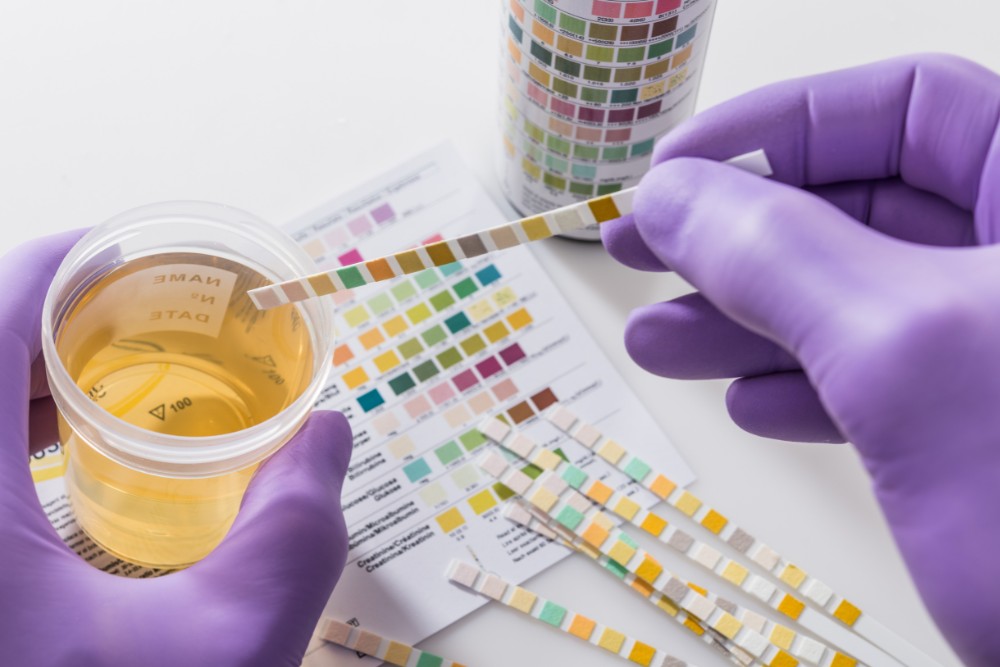
You can buy urine test strips for blood detection at most pharmacies. These dipstick tests detect haemoglobin (the protein in blood cells) and can confirm whether blood is genuinely present. They’re reasonably reliable for a first check, though they’re not infallible. False positives happen, particularly if you’re dehydrated or have recently exercised intensely.
But—and this is important—home testing shouldn’t replace proper medical evaluation. These strips can’t tell you why blood is there, which is rather the crucial question, isn’t it?
When Timing Tells You Something Important
Pay attention to when the discolouration appears during urination. Blood at the start often suggests issues with the urethra. Blood throughout the entire stream might indicate problems higher up—bladder or kidneys. Blood at the end could point to bladder inflammation.
Is it painful? Painless blood in urine is actually more concerning than painful episodes, which sounds counterintuitive. Pain alongside blood often indicates infection or kidney stones—unpleasant, certainly, but usually straightforward to treat. Painless bleeding, particularly in people over 50, requires investigation to rule out bladder or kidney cancers. The Cancer Research UK website notes that blood in urine is the most common symptom of bladder cancer, though most people with haematuria don’t have cancer.
Researchers at the University of Exeter examined over 6,000 patients with blood in their urine and found that whilst only about 3% had urological cancer, certain risk factors—age over 60, male sex, and visible rather than microscopic bleeding—significantly increased that percentage.
What Actually Happens at the Doctor’s
Once you’ve made that GP appointment (which you should, even if you’re not particularly worried), expect questions. Lots of them. Your doctor will want to know about timing, pain, frequency, your medical history, medications, whether you’ve travelled recently, if you’ve had infections.
They’ll do a proper urine test—sending a sample to the lab rather than relying on dipsticks. This picks up bacteria, protein, and abnormal cells alongside blood. You might have blood tests checking kidney function and looking for signs of infection or other conditions.
Depending on your age, symptoms, and test results, you might be referred to urology for further investigation. This could mean cystoscopy (a camera examining your bladder—less dreadful than it sounds, honestly) or imaging like ultrasound or CT scans.
I think what surprises people most is that sometimes, even after thorough investigation, doctors never identify a definitive cause. Studies suggest this happens in roughly 30-50% of microscopic haematuria cases. It’s frustrating, but it usually means nothing sinister is lurking.
The bottom line? If you spot blood in your urine—or suspect you have—don’t let embarrassment or fear delay you. Most causes are treatable, and early detection matters for the more serious possibilities.
Your body is trying to tell you something. Time to listen.
And please, don’t turn to Google’s symptom checker at 2am. That way lies nothing but anxiety. Book that appointment instead. Your future self will thank you.
