

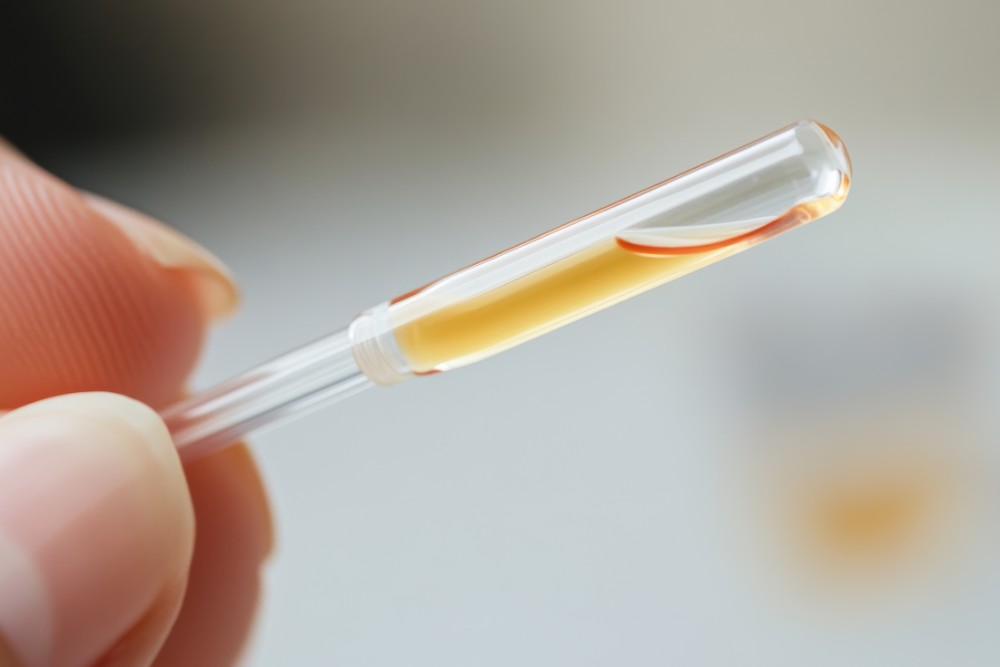
You’ve just collected a urine sample, watched the nurse dip that small plastic strip in, and now you’re sitting there whilst she squints at the changing colours. “There’s a trace of blood,” she says, and suddenly your mind’s racing. What does that even mean? Is it serious? Should you be worried?
I’ve lost count of how many people I’ve spoken to who’ve been caught off guard by this exact scenario. The thing is, finding trace blood in a urine dipstick test is incredibly common – far more common than most people realise – and it doesn’t always signal something serious.
What Does ‘Trace Blood’ Actually Mean?
Right, let’s start with the basics. When we talk about trace blood on a dipstick, we’re talking about the absolute lowest detectable level of blood in your urine. These dipsticks measure haemoglobin – the protein in red blood cells – and they’re remarkably sensitive. We’re talking about detecting as few as 5-10 red blood cells per microlitre.
To put that in perspective, that’s such a tiny amount you’d never see it with your naked eye. Your urine would look completely normal. The dipstick just happens to be sensitive enough to pick it up.
According to the NHS, blood in urine – what doctors call haematuria – can have dozens of different causes, ranging from completely harmless to things that need proper investigation. The trace reading sits right at that frustrating borderline where it’s detected but not necessarily meaningful.
Why You Might Get a Trace Reading (And It’s Often Nothing)
Here’s what catches people out: there are loads of perfectly innocent reasons why you might show trace blood on a dipstick.
Exercise is a big one. If you’ve been for a long run or done intense exercise in the previous 24-48 hours, you can get what’s called exercise-induced haematuria. It’s temporary and harmless. I remember reading about a study from the British Journal of Sports Medicine a few years back that found up to 20% of marathon runners showed blood in their urine post-race. It typically clears up within 72 hours.
Menstruation is another obvious one, though most people are savvy enough to avoid testing during their period. Still, contamination can happen even a day or two after.
Then there’s the simple fact that dipsticks aren’t perfect. They can give false positives. Certain medications, vitamin C supplements, and even some foods can interfere with the results. Dehydration can concentrate your urine and make trace amounts more detectable.
Urinary tract infections are probably the most common medical cause of trace blood. If you’ve got any burning, urgency, or frequency alongside that trace reading, a UTI’s likely the culprit. Treatment’s straightforward, and once it clears, so does the blood.
When Should You Actually Be Concerned?
Look, I don’t want to downplay this entirely. Sometimes trace blood is the first hint of something that needs attention.
Age matters here. If you’re over 40 and you’ve got unexplained blood in your urine – even just a trace – doctors tend to take it more seriously. Kidney stones, bladder issues, and yes, occasionally cancers can present this way. According to research published in the British Journal of General Practice in 2022, visible blood in urine carries about a 10% chance of cancer in patients over 50, though they noted that non-visible blood – which includes trace readings – has a much lower risk.
Persistent readings are the key word here. A single trace result that never shows up again? Probably nothing. But if you’re repeatedly showing trace blood across multiple tests, that’s when your GP will likely want to dig deeper.
Other symptoms change the picture too. If you’ve got pain, weight loss, fever, or you’re seeing visible blood even occasionally, don’t brush it off. That combination needs proper investigation.
What Happens Next?
So you’ve got a trace reading. What now?
Honestly, it depends on context. If you’re young, healthy, you’ve just done a ton of exercise, and you’ve no other symptoms, your doctor might just suggest repeating the test in a few weeks. If it’s gone, job done.
If you’ve got symptoms suggesting a UTI, you’ll probably get a urine culture sent off and possibly antibiotics. Fairly straightforward.
For persistent unexplained trace blood, especially if you’re over 40 or have risk factors, your GP might refer you for further tests. This could include an ultrasound of your kidneys and bladder, or potentially a cystoscopy – where they have a look inside your bladder with a tiny camera. Sounds grim, but it’s the gold standard for ruling out bladder issues.
The waiting can be the worst part, I think. You’re sat there googling (we all do it, even though we know we shouldn’t), working yourself into a state. Try to remember that trace readings are common, and most of the time they turn out to be either temporary or easily treatable.
One last thing worth mentioning: if you’re worried, push for answers. I’ve spoken to too many people who’ve been told “let’s just monitor it” when they’d really rather know for certain what’s going on. It’s your body, and you’re entitled to understand what’s happening and why your doctor’s recommending a particular approach.
The bottom line? A trace of blood on a dipstick isn’t an automatic red flag, but it’s not something to completely ignore either. Context matters – your age, symptoms, and whether it persists – and that’s exactly why these tests are done as part of a bigger picture rather than in isolation.
