

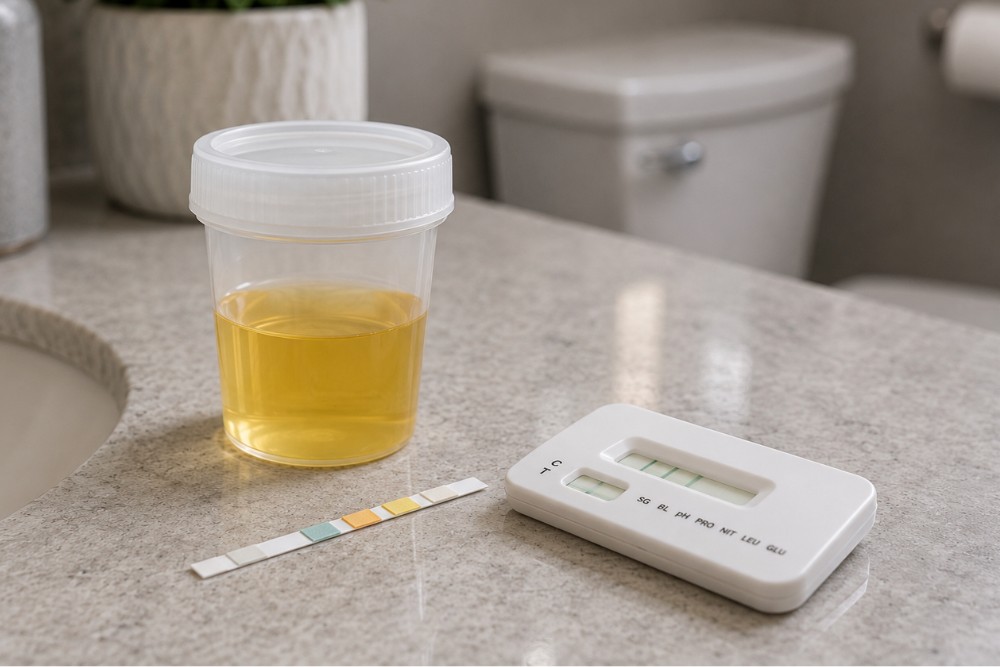
I’ve noticed more people asking me about home urine tests for diabetes lately, which makes sense given how they’ve become far more accessible than they were even five years ago. You can pick them up at Boots or order them online, but here’s what’s interesting—and what I wish more people understood before they start peeing on test strips in their bathroom.
\p>Let me walk you through what’s actually happening when you use one of these tests, because it’s not quite as straightforward as checking whether you’re pregnant.
What a Home Urine Test Actually Detects
Right, so here’s the thing. When you use a urine test strip for diabetes, you’re specifically checking for glucose in your urine. Normally, your kidneys don’t let glucose slip through into your pee—they’re quite good at holding onto it. But when blood sugar levels climb really high (we’re talking above about 10 mmol/L), your kidneys essentially get overwhelmed and glucose starts appearing in your urine.
The test strips contain chemicals that react with glucose, changing colour if it’s present. You match the colour to a chart, and that tells you roughly how much glucose has spilled over. Simple enough, right?
Well, yes and no. The problem is that by the time glucose shows up in your urine, your blood sugar has already been elevated for a while. According to NHS guidance on diabetes diagnosis, this means urine tests can miss the early stages of diabetes or pre-diabetes entirely. They’re picking up the overflow, not the initial problem.
I think of it like this: it’s a bit like checking for a leak by looking for water on your floor, rather than checking the pipes directly. You’ll spot a major problem, but you might miss a smaller one that’s been building for months.
When These Tests Might Be Useful (And When They’re Not)
So where do home urine tests actually fit in? They can be handy if you already have diabetes and want a quick, rough check. Some people use them as a backup to their usual blood glucose monitoring—perhaps when they’re feeling unusually thirsty or tired and want reassurance.
They’re also dirt cheap compared to blood glucose monitors. We’re talking a couple of quid for a pack of strips versus £15-30 for a blood glucose meter plus ongoing strip costs.
But—and this is quite important—they’re not reliable for diagnosis. Research published in Diabetes Care back in 2021 confirmed what doctors have known for ages: urine glucose testing has pretty poor sensitivity for detecting diabetes, particularly Type 2. You could have consistently elevated blood sugar that’s doing damage but still get a negative urine test.
The NHS doesn’t recommend urine tests as a primary method for diagnosing diabetes anymore. Blood tests—specifically HbA1c or fasting glucose tests—are the gold standard. They give you actual numbers, they’re more accurate, and they can catch problems earlier.
The Real Warning Signs You Shouldn’t Ignore
Here’s what concerns me about the growing popularity of home testing kits. Sometimes people use them as a way to avoid going to their GP, thinking they can rule out diabetes themselves. But diabetes is sneaky. Type 2 particularly can develop gradually with symptoms so mild you barely notice them.
The classic signs everyone mentions—excessive thirst, frequent urination, unexplained weight loss—don’t always show up clearly. I’ve spoken with people who just felt a bit more tired than usual or noticed they were getting more infections. One friend thought her blurred vision was just age catching up with her. Turned out her blood sugar had been elevated for probably two years.
If you’re experiencing any symptoms, or if you’re in a higher-risk group (over 40, carrying extra weight around your middle, have a family history of diabetes, or are of South Asian, African-Caribbean, or Black African descent), a home urine test really isn’t adequate. You need proper blood tests, and frankly, you deserve them.
So What Should You Actually Do?
Look, I’m not completely against home urine tests. If you’ve got diagnosed diabetes and your blood glucose monitor has run out of strips, they’re better than nothing as a temporary measure. They might give you a heads-up that something’s gone wonky with your blood sugar management.
But if you’re testing because you’re worried you might have diabetes? Please book a proper appointment. The NHS offers free diabetes checks for eligible people, and even if you don’t qualify for the formal screening programme, your GP can arrange a simple blood test.
The HbA1c test they’ll likely do measures your average blood glucose over the past two to three months. It’s done with a single blood sample, results are usually back within a week, and it gives you a proper picture of what’s happening in your body. Much more useful than colour-matching a test strip in your bathroom.
I suppose what I’m saying is this: home urine tests are accessible and cheap, which is brilliant. But accessibility doesn’t equal accuracy, and when it comes to something as important as diabetes—which affects nearly 5 million people in the UK—you want the right answer, not just a quick one.
Save the fiver you’d spend on test strips and put it towards a decent coffee while you wait for your GP appointment instead. Your future self will thank you for getting the proper test done.
