

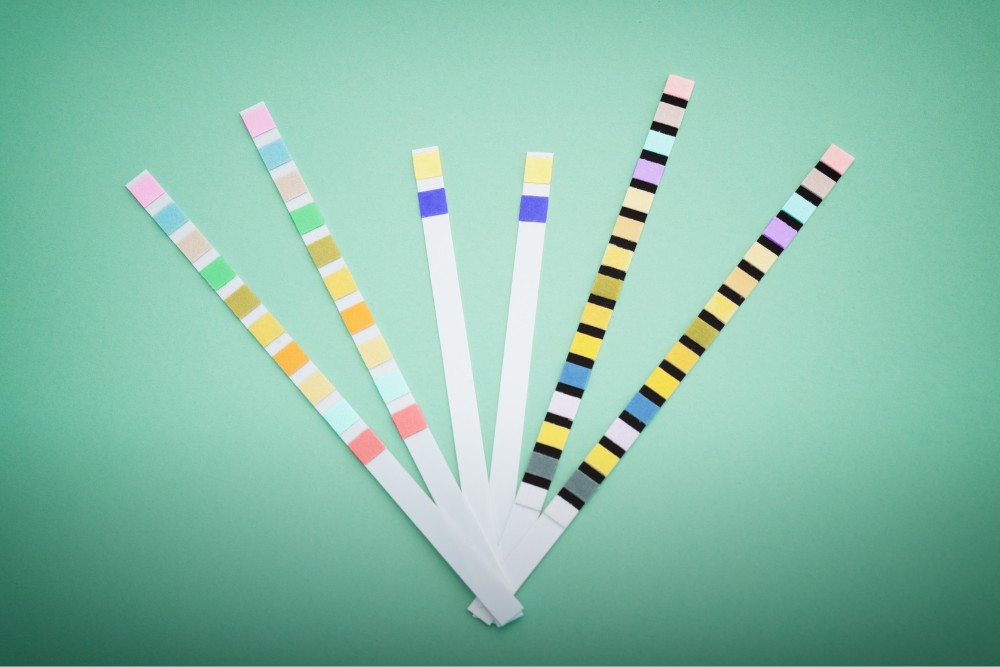
Right, let’s talk about something that’s probably happened to you or someone you know: that burning sensation when you wee, the constant urge to go, and the sneaking suspicion you’ve got a urinary tract infection. The good news? These days, you don’t always need to wait days for lab results. The UTI dipstick test has become a bit of a first-line hero in sorting out whether those symptoms are actually a UTI or something else entirely.
I’ll be honest—when I first heard about dipstick tests, I assumed they were just a quick-and-dirty screening tool that wasn’t terribly accurate. Turns out I was only half right.
What Actually Happens During a UTI Dipstick Test
The test itself is refreshingly straightforward. You provide a urine sample (midstream is best, as it’s less likely to be contaminated), and a healthcare professional dips a small plastic strip covered in chemical patches into it. Within about 60 seconds, those patches change colour based on what’s present in your urine.
The dipstick checks for several things, but the two main culprits it’s hunting for are nitrites and leukocytes. Nitrites are produced when certain bacteria—particularly E. coli, which causes about 80% of UTIs—break down nitrates in your urine. Leukocytes are white blood cells, your body’s infection-fighting troops. If they’re present in significant numbers, something’s probably going on.
Most dipsticks also check pH, protein, blood, and a few other markers. It’s a surprisingly informative little strip when you think about it.
How Accurate Are These Things, Really?
Here’s where it gets interesting. According to NHS guidance on UTIs, dipstick tests are pretty good at ruling things out, but they’re not perfect at confirming infections. The specificity is generally high—meaning if it’s negative, you probably don’t have a UTI. But the sensitivity can be a bit dodgy, particularly in certain populations.
A study published in the British Medical Journal back in 2020 looked at over 3,000 women with UTI symptoms and found that whilst dipstick tests were useful, they missed about 20% of culture-confirmed infections. That’s not nothing. The researchers noted that relying solely on dipsticks without considering symptoms could lead to undertreatment in some cases.
What’s fascinating is that the test performs differently depending on who’s being tested. In older adults, for instance, the presence of bacteria in urine (bacteriuria) is actually quite common even without infection. This means dipsticks can show positive results in elderly people who don’t actually have a symptomatic UTI, potentially leading to unnecessary antibiotic prescriptions.
When Your GP Might Use (or Skip) the Dipstick
Current UK guidelines are actually quite specific about when to use these tests. For women under 65 with typical UTI symptoms—that burning pain, frequency, urgency—many GPs will diagnose and treat based on symptoms alone, without even bothering with a dipstick. The symptoms are usually reliable enough.
The dipstick becomes more useful when things are less clear-cut. Perhaps you’ve got some symptoms but they’re a bit vague. Maybe you’re a man (UTIs are less common in men, so doctors want more evidence before treating). Or you’re pregnant, where UTIs need careful monitoring.
Interestingly, NICE guidance from 2018 specifically advises against using dipstick tests in people over 65 with UTI symptoms, because the results can be misleading in this age group. Instead, they recommend sending samples for proper laboratory culture if there’s diagnostic uncertainty.
What Happens If Your Test Is Positive (or Negative)
A positive dipstick test, combined with your symptoms, usually means you’ll be prescribed antibiotics. The most common first-line treatment in the UK is nitrofurantoin or trimethoprim, typically for three to seven days depending on your circumstances.
But here’s something that catches people out: sometimes your dipstick comes back negative even though you’re absolutely convinced you’ve got a UTI. This doesn’t necessarily mean you’re imagining things. Some bacteria don’t produce nitrites. Early infections might not have triggered enough white blood cell response yet. Or if you’ve been drinking lots of water (which, fair enough, you probably have because it helps), your urine might be too dilute for the test to pick up the markers.
If your symptoms are severe or you’re in a higher-risk group, your doctor might well treat you anyway or send your sample off for a culture test, which takes a few days but is more definitive. The culture can also identify exactly which bacteria you’re dealing with and which antibiotics it’s sensitive to—pretty useful if you’re someone who gets recurrent infections.
I think it’s worth mentioning that whilst these tests are quick and convenient, they’re just one piece of the diagnostic puzzle. Your symptoms matter enormously. So does your medical history. A dipstick test isn’t making the diagnosis—it’s giving your doctor additional information to work with.
The takeaway? UTI dipstick tests are genuinely useful tools that can provide answers within minutes rather than days. They’re best at ruling out infections when negative, and they work brilliantly in the right context. But they’re not infallible, and that’s exactly why you need a healthcare professional interpreting the results alongside your symptoms rather than relying on the test alone. Not quite as simple as a pregnancy test, then, but still pretty clever for a strip of paper.
